
An Arctic Revival
How Europe’s Indigenous Created Their Own Christianity and Spread It among Themselves
The Sami are considered the indigenous peoples of Europe. Their homeland is Sapmi, which is the northern regions of what is now Norway, Finland, Sweden, and Russia, or “Lapland.” Historically, they have also been referred to as “Lapps,” but some consider this term derisive. Specifically for reindeer husbandry, the Sami have inspired many Christmas traditions, such as reindeer, elves’ shoes and clothing, and a mythical people dwelling in the North Pole.
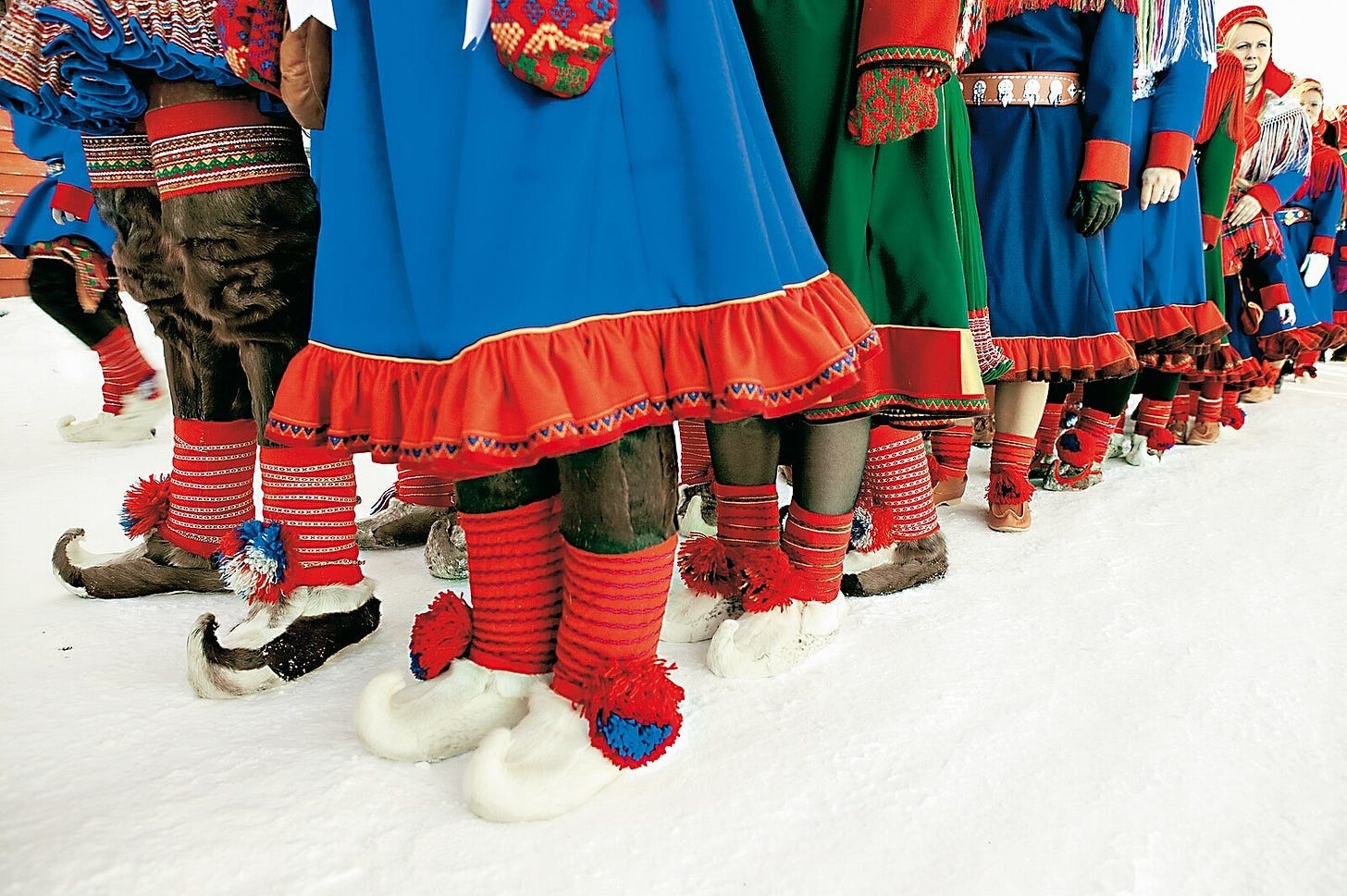

Under the emerald curves of a Lapland Winter sky, in a cold hut, Anna-Lena birthed her first child. Shortly after, the Sami mother wrapped herself in reindeer fur, tucked her infant son into a birch-bark basket, and slung him onto her back. She hooked her curled boots into willow bindings and set off on skis in the winter darkness of January for the 44-mile journey to the parsonage for holy baptism, in the year of our Lord 1800.
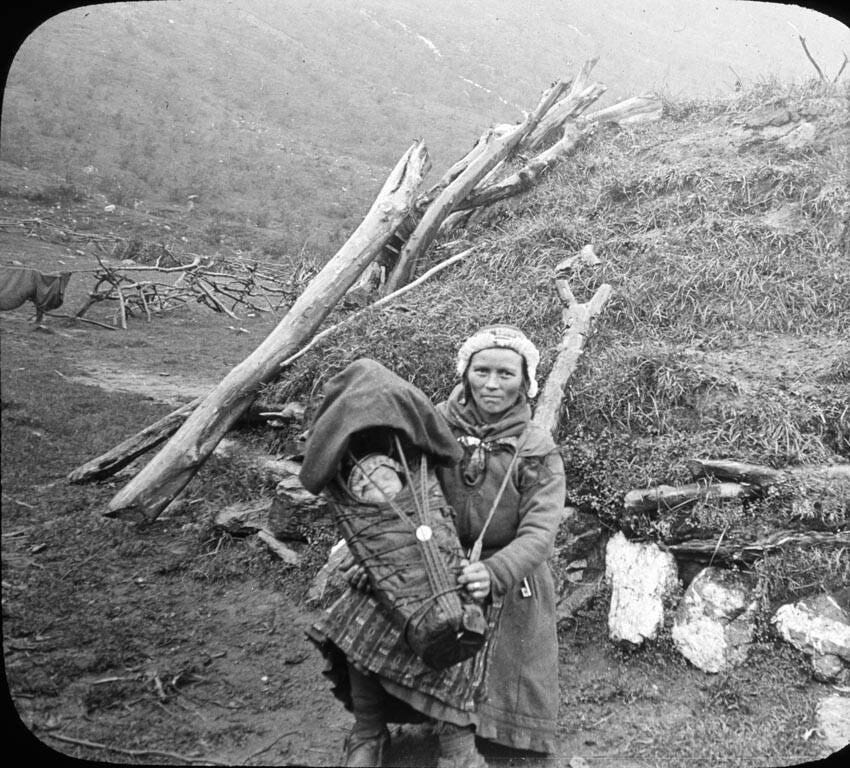
Hour after hour, Anna-Lena glided through cloud-white birch forests and frozen, desolate tundra as her skis clicked and hummed beneath her. The stillness was broken when she was overtaken by biting blasts of a hissing blizzard. Exhausted, the postpartum mother collapsed at the base of a pine. Snow began to bury the travelers.
A nearby reindeer-herding Sami family emerged from their a lavvu (a temporary shelter, similar to a tipi) and followed their hounds, who were incessantly barking on alert. The family rescued the endangered travelers, generously offering the comforting warmth of their dogs, the most desirable places nearest the fire, and hot coffee. After the travelers unthawed their frozen limbs and the howling winds ceased, they set off again. Just as she’d been instructed twice in her dreams, Anna-Lena baptized her son—Lars Levi Laestadius.
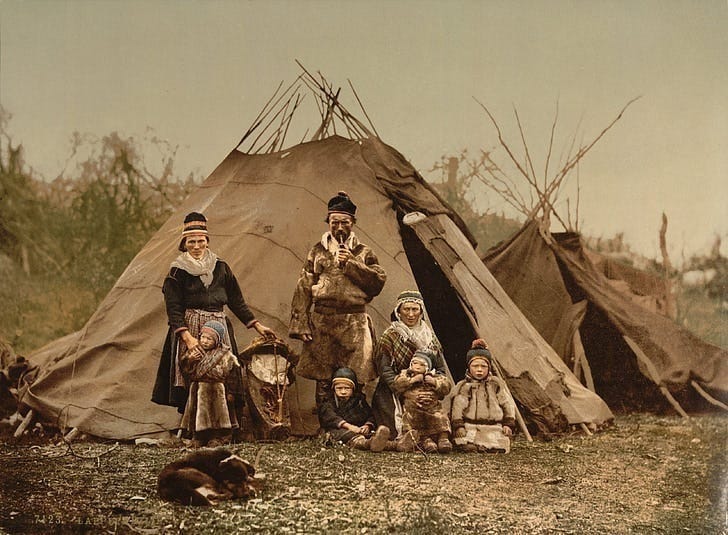
The expansive backcountry where Anna-Lena and her family lived offered few economic opportunities; they moved from place to place in continual poverty. Her husband turned to whiskey to forget his frustrations and failures, wretchedness and shame. This habit of his led only to further dehumanizing treatment of his family. If it could be any consolation, their family was not unique in this vice and depravity.
Early 19th-century Lapland was a time of destitution, when rag-clad children were raised in deplorable conditions. But of all the pitiful people, none were despised as much as they were—poverty-stricken “Lapps” with a drunk for a dad. They were the most loathsome of all, and upstanding neighbors staunchly shunned them.
Yet Lars Levi grew up and refused to be ashamed of being Sami. While studying botany at an Uppsala university, he dressed in his traditional Sami clothing, disregarding frequent mocking sneers. When the king of Sweden invited Laestadius to join the French Navy on a botany excursion, he endured derisive remarks from servants, casting aspersions on his tattered Sami attire, ridiculing: “Does this man intend to dine with the rest?”1 When people scorned this odd-looking stranger, he often responded to their vitriol in Latin. This silenced his scoffers. Despite being a “simple-minded Lapp,” Laestadius had a fine mind, speaking at least six languages, and renowned as an exceptional botanist—receiving the French Legion medal of honor for his botany work on their La Recherche expedition. Much of what is known about the flora of northern Sweden today is due to him. Many Arctic plants even bear his name.

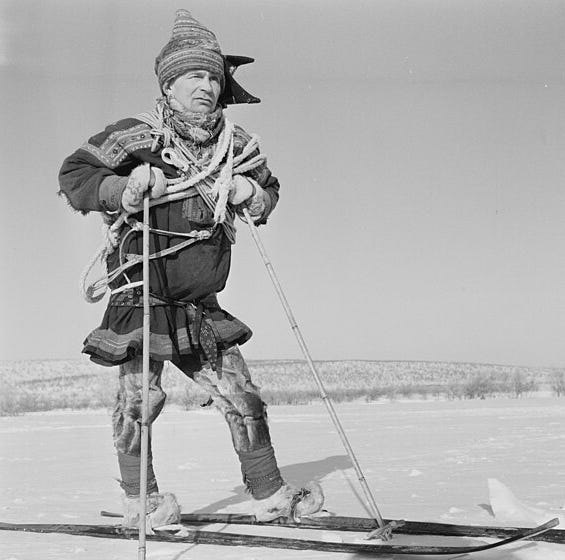

One evening, a professor invited him to his home. Wearing his only coat, a faded, ragged garment that had served him well in the Arctic wilderness, he arrived at the door. The house servant suspiciously questioned what business he had in this household. Despite Laestadius stating that he had accepted a dinner invitation, the servant remained unconvinced until the professor appeared and ushered in his guest.
For financial reasons, Laestadius abandoned his botany studies in favor of ministry. At this time, ministers were more aligned with the Crown’s governance than that of Christ. Their work consisted of perfunctory baptisms, marriages, burials, and communion, but scant shepherding of souls. In 1826, he was sent over 700 miles to Karesuando, “almost against my will,” he wrote—the most undesirable parish located in the harsh landscape of the far north of Sweden with 600 Sami and 200 pioneer settlers. Karesuando was considered the armpit of Sweden—a foul-smelling, dirty, and dark place where the sun refused to rise for several winter months. Inebriated “Lapps” could be seen lying among their dogs in the churches and markets, and people could be heard squabbling over goods and stealing each other’s reindeer. The inhabitants often practiced dark magic, cursing and casting harmful incantations towards one another. Parents neglected their duties, lying passed-out drunk while the lavvu fire went cold, freezing infants to death. Meanwhile, whiskey merchants profiteered off this societal decay, condemning the people toward extinction.
Despite the sale and distribution of alcohol being illegal, drunkenness was a serious problem. Its forbidden status caused alcohol smuggling to burgeon as a lucrative business and consumption of spirits actually increased in these years.
Even the Sami men who did occasionally attend church didn’t bother sobering up and often caused disturbances in the holy house. On regular days, they brought reindeer to market, the favored gathering place for men to drink and barter. Yet, these men often returned home empty-handed as they had been cheated out of the goods they had gone to barter while they were in a stupor of drunkenness. Sometimes they left their reindeer herds unattended, leaving them to be ravaged by wolves. This negligence yielded accusations, revenge, violence, disharmony, and sham lawsuits among the inhabitants.
Alcoholism among the settlers was just as bad. Whisky was their steady companion during the unending black polar nights. Excessive inebriation was the standard form of celebrating holidays. Worsening matters, some settlers traded the Sami alcohol for reindeer, causing the Sami to slide deeper into poverty.
Sami women were not immune to alcoholism either. Sometimes, they would even give liquor to their children. Laestadius wrote of this: “When mothers lay all day or half a day in a drunken stupor, the little children were left to bawl until they developed an umbilical hernia. How many of these little ones must have cried themselves to death seeing that the angel of murder or the unclean spirit of liquor has raged among the people for hundreds of years?” Because of alcoholism, infant mortality was high, so much so that in some parishes, despite the substantial birth rate, the overall population decreased.
The parish in Karesuando was dilapidated, and Laestadius could hardly expect his poor parishioners to pay the tithes required by law to support him. He and his beloved wife, Brita Kajsa, lived in extreme frugality, supplementing their paltry income by collecting plants and sending them to botanists in southern Sweden. He even sold his herbarium, consisting of a whopping 6,700 plants, to France.2 Their love for one another helped them endure his posting in the barren landscape. As an educated and thoughtful man, Leastadius lived in intellectual solitude among reindeer thieves, drunkards, and smugglers whose lives had devolved into degeneracy.
He plunged into despair when his adored son Levi died at age three. Laestadius wrote of his son running to meet him at the door and, if there was a ptarmigan in his hunting bag, Levi would carry it into his mother, “but now there was no Levi any more to carry in the pretty bird.” Pondering his loss, he wrote, “A person truly needs some reminders of his mortality; otherwise he completely forgets the purpose of life here on earth.” He felt distant from God and wandered fretfully around the base of a nearby mountain, so much so that he wore a path into the earth. People said he was seeking a way to heaven; they began to wonder if he had lost his mind.
During this time, he was deployed to the village of Åsele in southern Lapland for a parish inspection. While in Åsele, he encountered Milla Clementsdatter, a destitute Sami, who would later become known as “Mary of Lapland” and the spiritual mother of Laestadius.
Hers was a shunned life of poverty, hunger, abuse, and loneliness amidst the bitter Arctic cold. The dark cloud of alcoholism hovered all around Milla, who had been abandoned by her parents and raised in cruel foster families. One callous family would take her clothes so that she couldn’t run away from her misery without freezing to death. Another father she lived with drank heavily and gave away all their food. To avoid starvation, she ground reindeer antlers into meal to sustain herself. At one point, she secretly spun yarn for other families to earn a meager income. When her drunk uncle learned of this, he beat the tar out of her. Milla came to despise the wreckage of alcohol and found comfort only in her faith. Yet, from experiencing the stupefying love of God, she had a felt understanding that she was a treasured Child of the Kingdom of Heaven. Perplexingly, she glowed with an infectious joy and glittering hope like amber sunbeams radiating on the frozen mountains.
Although a minister, Laestadius mysteriously opened his heart to this poor Sami girl, telling her of his sorrow and his felt distance from God. With profound compassion, Milla heartfully shared the irrational hope found in Jesus. In that moment, the heaviness lifted from him, and he was overcome with a freeing sense of relief—like he could ascend right up into the heavens! For the first time in his life, he had a felt sense of God’s overwhelming love. He realized that he, a poor, lowly, despised Sami, was a deeply cherished child of the Utmost High and that God would do anything to never ever lose him. This was his moment of “awakening.”
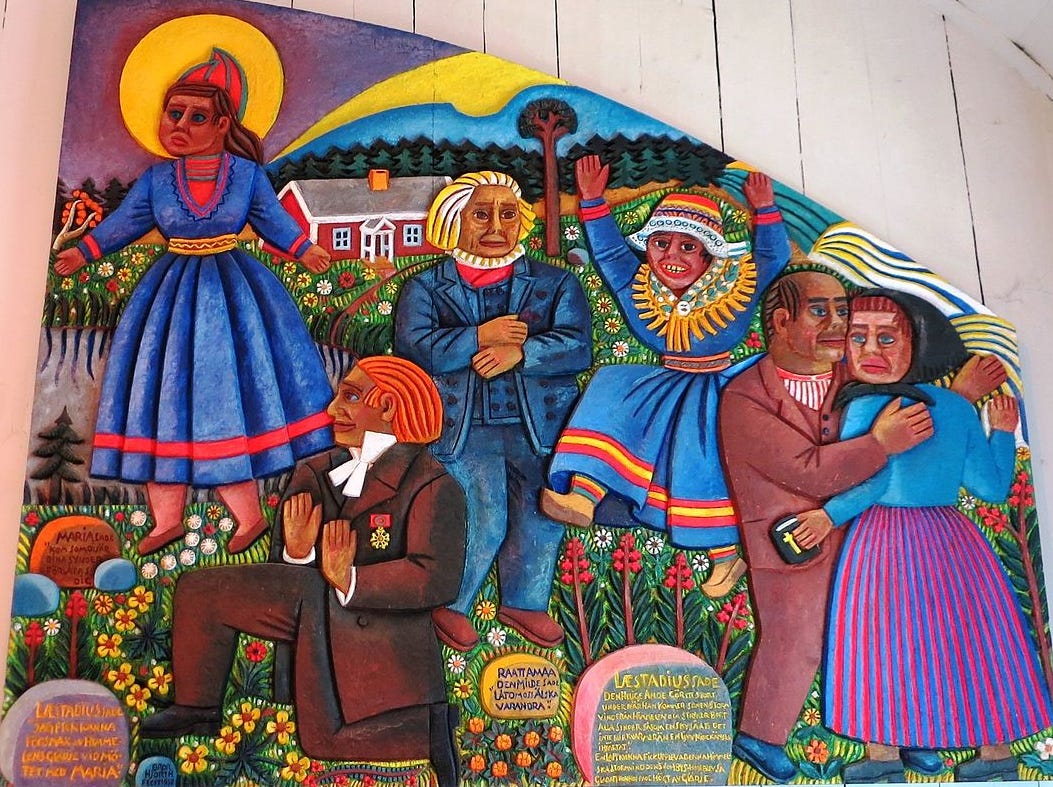

Upon returning to Karesuando, he saw his parishioners not as drunks, thieves, and liars, but as precious human people, created in the Image of God, who were living in bondage to the egregious dark forces of ruinous sin. So mired in sin, they couldn’t even realize the depravity of their lives. Driven by love for his people, a righteous storm of anger welled up within. Sunday after Sunday, he fiercely rebuked and chastised the whiskey merchants for their wreckage. In loving fury, he pleaded and shouted from the pulpit, urging people to stop drinking, fighting, thieving, and ruining their lives. People were aghast and frightened by his piercing words. They stopped coming to the church and called him “Mad Lasse.” But he was used to scorn and didn’t care!
In one passionate sermon, he rebuked parents, saying:
“Do you think that your children will support you in your old age when you yourselves live empty lives, show your children a bad example, and make them children of hell, worse than you yourselves? Do you think they don’t have ears to hear your curses, your idle talk and your insults? Do you think that they don’t have eyes to see your drunkenness and the quality of your godless life? Do not deceive yourselves! Of course children learn from their parents when they observe cursing, drunkenness, stealing, fighting, and a vain and empty life every day at home.”
He used illuminating parables from the Bible and the everyday lives of the people of Lapland. Unlike the State Church that used rationalism and heady theology, Laestadius believed in the supernatural world and spoke of the mystical experience of Christ’s death through the lens of the “Blood Elder”—an ancient Sami worldview where the boundary between life and death is like a line drawn in water, and dreams infuse into the present.
He was severe and uncompromising, yet he spoke from a heart that deeply loved souls. With an ardent concern for his parishioners, Laestadius endeavored to shine a mirror upon their self-deception in order to deliver them from their despair and onto the path of true happiness. Word about his passionate sermons soon spread. Though his saltiness had driven many away from attending church, they eventually thirsted for truth and returned in greater numbers to hear more. The effect of hearing a fellow Sami speaking such a bold message to them in their own language cannot be overestimated.
Soon, the pews were full.
The sparks of a powerful years-long revival that would alter the course of Lapland for generations were starting to crackle.
Revivals are supernatural events in which the beyond-human force of the Holy Spirit whirls through, around, and into Creation. The vibrations are powerful, fierce, and undeniable. Emotions run high. Mystical events occur. Apparitions appear. Strange coincidences abound. Folks behave oddly. People are born again. Nothing is ever the same.
The Great Revival
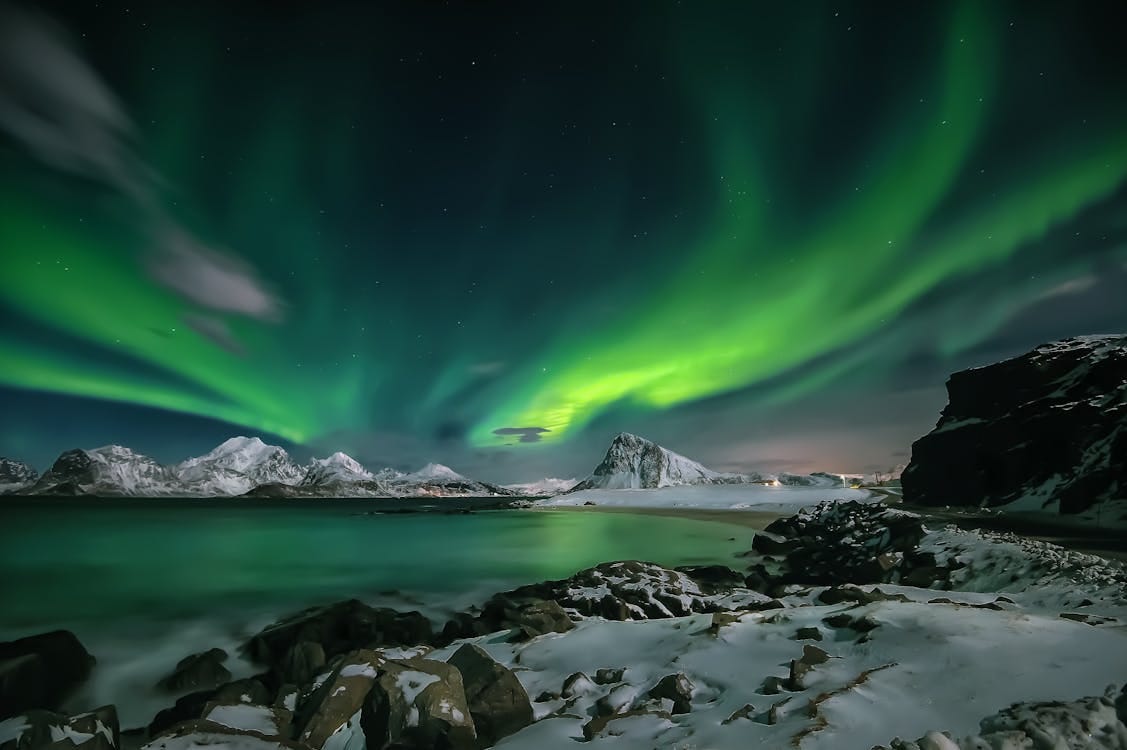
While steel railroads were transforming travel in the United States of America, spiritual conversions were transforming the culture of Lapland. On December 5, 1845, nearly one year after his own awakening, the first conversion occurred. A woman experienced a release from her despair and received an inner understanding that she was an accepted and treasured child of a loving God when she heard a voice audibly say, “Your sins are forgiven.” Her heart overflowed with such rapture that she began shaking, jumping, sobbing, shouting, and clapping. At that moment, an earthquake was felt in the region. For even the earth shakes with joy when humans begin to live rightly. From that day forward, a roaring revival ignited throughout the whole of Lapland. As the twirling flare of the aurora borealis tangled and animated the skies, the Holy Spirit swirled and revived souls, toppling both Sami and settler over into emotionally-charged, life-changing awakenings.
On Christmas Eve in 1847, the revival was still in full swing, and a huge crowd was entering the parsonage. Laestadius reflected that he was not fit to lead the people out of darkness. Suddenly, he beheld a bright tongue of flames rising into the heavens from the church steeple. In that moment, he understood that it wasn’t he who was leading the people, but rather a force far beyond the powers of mere mortals—it was the mysterious power of the Holy Spirit reviving the people out of the slumber of their life-destroying ways. The fire of heaven was coming into their hellish conditions on earth with sparks of repentance to kindle restored right relation.
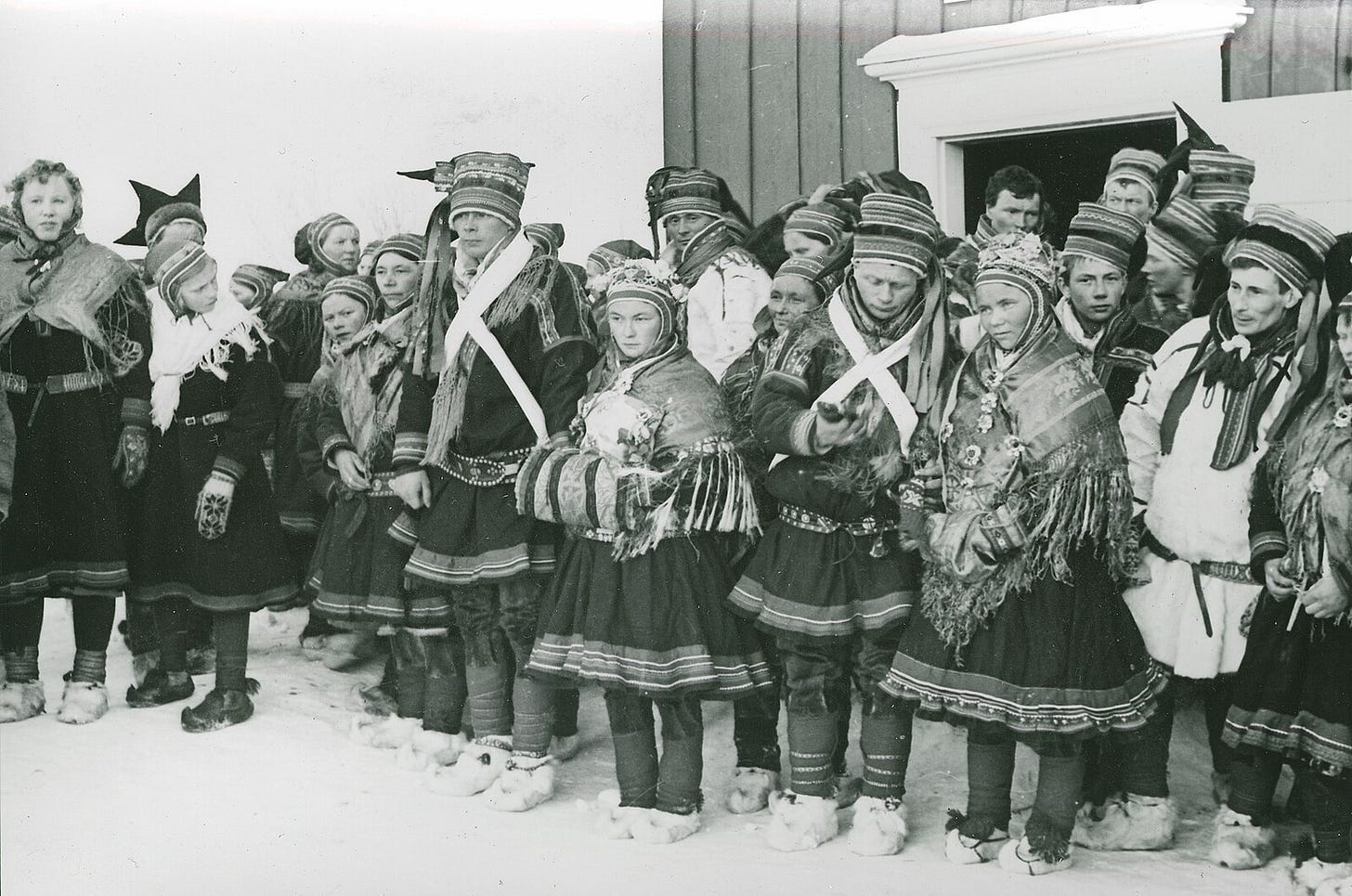
When people awakened from their desecrated lives, unconstrained, loud rejoicing occurred. Church services now involved fiery sermons, ebullient emotional outbursts, wailing, prancing, and a complete lack of decorum—similar to the old Sami shamanic ecstasies. They called this liikutuksia. This wasn’t quiet Swedish Lutheranism, but Wild Christianity—as wild as the landscape from which it emerged.
Some found this new religious expression uncomfortable, which brought Laestadius several enemies. An adversary brought Laestadius to court for unlawful solicitation of funds for missionary work; the court ordered Laestadius to pay his accuser a fine. Out on the frozen lake in front of the parsonage, the accuser spitefully exhibited how he had used the ill-gotten funds for his most recent purchase: a strapping stallion. Abruptly, the ice gave way, and the prized beauty was engulfed by the water.
In one particularly powerful sermon, Laestadius instructed the parishioners to sing on the branches of the Tree of Life as songbirds where the Elder feeds and sustains them. Great numbers of parishioners were overtaken by surges of uncontrolled liikutuksia. When they crested the wave of elation, water began to gush upon the altar from the church ceiling, like a baptism. Many witnessed the wonder and wept and sang in ecstasy. Yet upon closer inspection, the altar was curiously dry.
Testimonies arose from other parishioners about conversions and awakenings that transformed people’s lives from desolation to devotion.3
One day, Antin and his friends decided to go to the little chapel in their village. As a joke, they climbed up into the old pulpit and pretended to preach a fervid sermon. During the irreverence, the pulpit crumbled and fell. One of the boys was injured and pulled out unconscious from under the rubble. Then, an apparition of a deceased Sami pastor appeared before the reckless teenagers. This haunted Antin, and he lived with a heavy conscience, believing himself to be irredeemable. When he had his own awakening, a euphoric lightness overtook him like a rebirth. He spent the rest of his life as a wilderness preacher, skiing to isolated peoples in backwoods cabins.
In another mystical conversion, a man called Jooni, whose parents were concerned he was “lost to the world,” was driving with his reindeer along the Muonio River when he saw, in the dark, an outstretched arm bearing a crimson-red sword. Even his reindeer spooked and gave that spot in the path a wide berth. This shook Jooni, and when he entered his hut, another frightening apparition appeared. Convinced that evil powers were taunting him, he converted and renounced his former life. He was never the same again.

Another story tells of Pekka, a vagrant and neglectful husband. He worked hard but always drank away his wages, leaving his family in poverty-stricken squalor. This weighed heavily on him. He tried to numb his failures as a man with more liquor. Laestadius approached Pekka and asked him if he was acceptable before God. Pekka shrank and looked at his reindeer moccasins. His cheeks burned with shame. Then Laestadius said: “He who goes to hell must do so boldly! And he who goes to heaven must also boldly make progress towards it.” Later, Pekka said, “Shove me to hell! For God’s earth can no longer bear me.” He was met with, “How do you want to go there? By stumbling, or by jumping head on?”
These conversations tormented Pekka. One evening, the blood-red brilliance of Jesus appeared before him. Hot tears streamed down Pekka’s face. In wariness, he lapsed into an exhausting sleep. He awoke covered in sweat, as if he’d come out of a steaming sauna. Pekka had been greatly mistaken. God’s creation wanted to bear him. In fact, The Good Shepherd would go to the literal polar ends of the earth to retrieve dear Pekka—a precious and prized child of God. The warmth of the Holy Spirit dissolved Pekka’s wounded, cold heart into a blissful, reviving peace. “For a whole week, I was in supernatural sensations. In Spirit, I beheld the brilliance of God’s kingdom.”
He told Laestadius about his mystical experience. When he dared to believe that he, a lowly despised Sami, was a child of the Utmost High, Laestadius urged him to go to Jukkasjarvi and spread the Good News. Pekka asked what he should do. “Preach the Word of God,” responded Laestadius. “But I don’t know how to preach,” Pekka replied. “I will give you a sermon and you can read it,” Laestadius answered. Willing, but humble, Pekka admitted, “But I can’t read.” Undeterred, Laestadius offered, “I will make you an alphabet from which you must learn to read aloud.”
After painstakingly learning the Sami alphabet that Laestadius had developed, Pekka went to Jukkasjarvi to deliver one of Laestadius’s sermons—a salty decoction. Pekka entered the pulpit and began bellowing: “Because of your drinking, selling whiskey, and earthy bustle […] curses are your morning and evening prayers! When liquor rises in your head, your eyes shed tears of the serpent!” While delivering blow after blow to the parishioners, Pekka noted “from their facial expressions, I could detect that matters now were not well,” and he began to look for the nearest door. With expediency, he hitched his reindeer to his sledge and slid off while billets of wood flew perilously close to him.
Laestadius did not mince words in his “salty” sermons:
The drunkard’s favorite god is the visible flowing liquor, rum, or whatever his name may be, which we call the devil’s shit, for the devil teaches people to ruin God’s grain and to make it harmful to body and soul. The people who drink it become animals […] What is the whore’s favorite god? That which she loves the most, some whoremonger, who deceives her and makes her an animal. What is the favorite god of the slave of the world? Moolah or money! Objects, possessions, beautiful buildings, beautiful horses or other worldly vanity, which are of no avail in death. All these transient things are the gods of the heathen!4
In 1848, Pekka made his way to Tornio to preach one of Laestadius’s most biting sermons. During the preaching, the listeners withdrew, one by one, towards the exit, until an angry hurricane of objections arose. Pekka again realized he was in grave danger. Before he knew it, he was pulled by the hair and beaten. “I could feel a large dagger cleaving the length of my back, which however only shredded the back of my great coat.” As his sledge skidded off, again billets of wood rained down around him. This time, accompanied by a rifle shot.
Open warfare between the forces of darkness and light had begun.
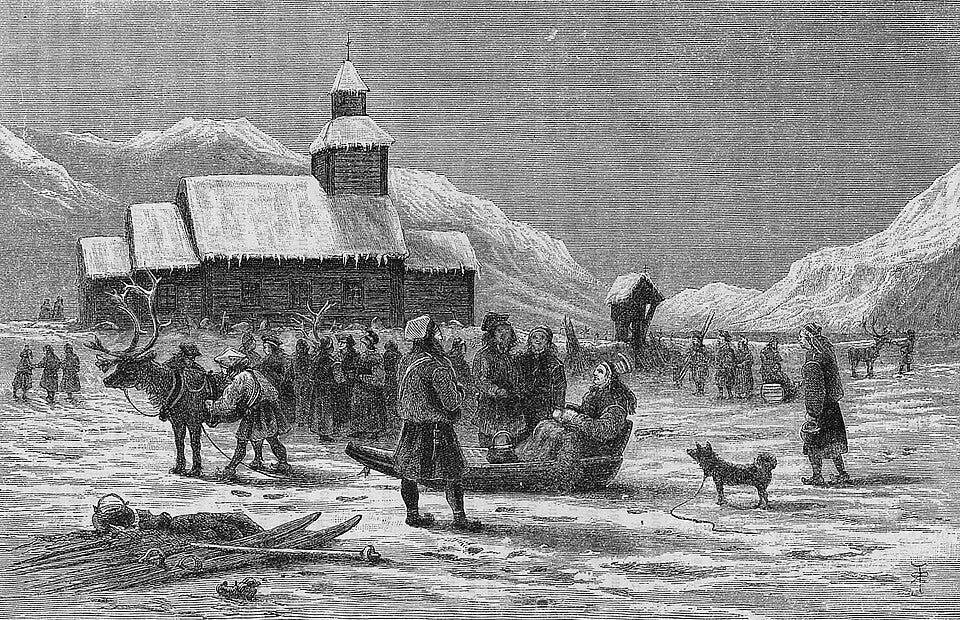
Nevertheless, Pekka was invited back to these parishes, and within a few years, an avalanche of awakenings crashed through the region—the rocky soil of frosty hearts transformed into marvelous fields of flowers. Upon hearing that their transgressions were not to be punished but forgiven, people gleamed with happiness and bliss. In repentance, they enthusiastically destroyed casks of whiskey. Whole communities went sober virtually overnight. Stolen reindeer were returned. Children were no longer neglected by drunk parents. Strained relationships were healed. Squabbles no longer ended in revenge, violence, or sham lawsuits, but in reconciliation and brotherly and sisterly love. Resentment vanished as forgiveness reigned.
In one instance, eighty-eight men confessed to the Swedish government via a joint letter that they were guilty of smuggling, offering to pay the government any money owed in tariffs. Officials in Stockholm wrote back, saying the smugglers could make their payment to the local parish to relieve the poor. It then became customary that if restitution could not be made to the wronged individual, payment should be made to charity.
As the people’s hearts melted, the birds returned, praising the Creator. Spring had finally arrived in Lapland.
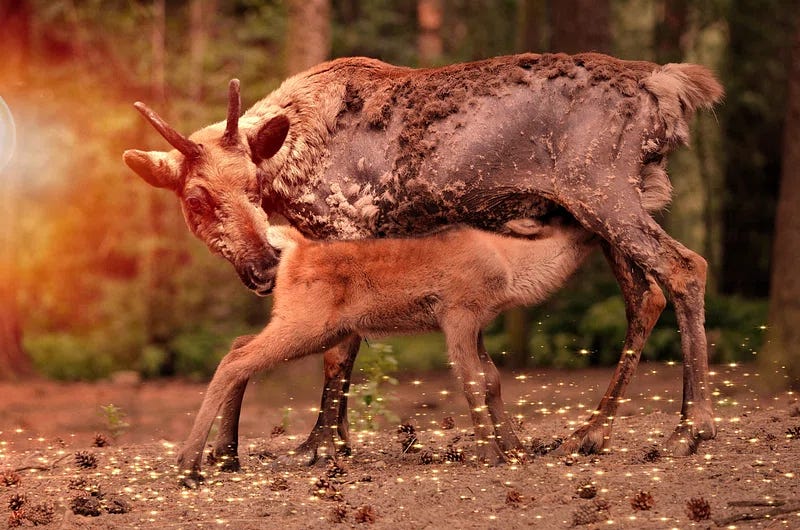
At the time, it was forbidden to have private devotional services in homes, such was the Crown’s grip extending through the arm of the State Church. To reach the Sami in the far reaches of the Arctic, without clashing with this law, Laestadius started a temperance society. He believed that only sincere conversion could truly free his Sami brothers and sisters from the grip of alcohol addiction. He sent around 30 awakened men throughout Lapland with letters to “promote temperance.” Thus, he did not labor alone. This wasn’t really temperance work. It was evangelism. Equipped with temperance speeches and copies of his sermons (written in the Sami language using ink made of blueberry juice and soot), the men blew the billowing winds of revival up into the icy peaks of the high mountains, down into the low river valleys, and across the wide tundra, lakes, and forests.
Heikki was one of these men. He created such upheaval during his journeys that he was thrown into the Oulu jail by the authorities in Kittila. When he was released, he simply returned to Kittila to continue his work. Again, he was arrested and the sheriff threatened throw him back in the Oulu jail to which Heikki responded, “You don’t have to send me there anymore, I have already been there in the Oulu jail where I tried to preach repentance to the impenitent whores and thieves, but they wouldn’t repent; besides I’m in a hurry to get elsewhere.” He was granted his freedom, and he continued to Kimijarvi, where he converted the rector, and then to Pudasjarvi, where he averted another arrest by escaping on skis into the foreboding wilderness.
Not only did the revival occur in churches, but also in tents, huts, and the open wilderness. As lives tangibly improved through experiencing the mystifying power of the Holy Spirit, the people developed their own understanding of Christianity. Person after person caught the fire from someone they knew, and a deluge of awakenings flooded Lapland, into Finland, Norway, and as far east as St. Petersburg.
It wasn’t ordained priests or certified foreign missionaries that swept Christianity through Sapmi. It was the Sami themselves.
Eight years after the first conversion, the culture of Lapland was fundamentally unrecognizable. In 1850, in Jukkasjarvi, the last whiskey merchants poured their brew on the ground. Five years earlier, about eight thousand measures of alcohol had been consumed in this sparsely populated parish consisting of only 290 people. The number dramatically plummeted so that by 1853, only three people were still known to drink alcohol in that region.
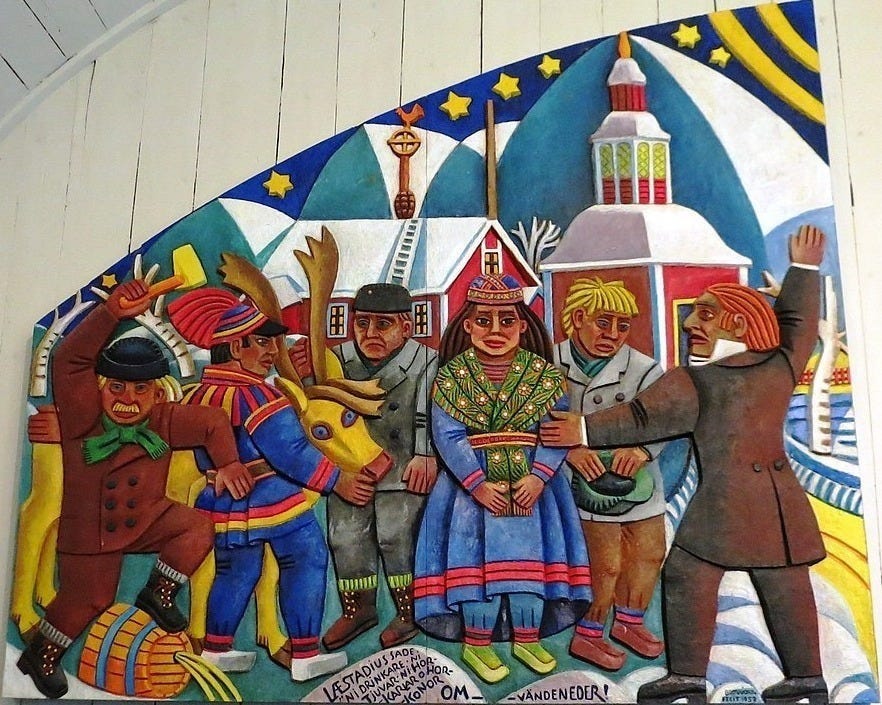
The gloomy decades of thieving, drunkenness, and smuggling had ended. As the renewing fire of revival slowly faded, it left the Scandinavian Arctic Circle with a culture of generational stability. Yet twinkles of the supernatural power of the Holy Spirit still flicker.
One Sunday evening, in 1908, a lavvu filled to bursting for a prayer meeting while Danish anthropologist Emilie Demant Hatt was living with the Sami. Many people entered into liikutuksia. Emilie admitted to being affected by the feeling of it all. So much so that she stepped outside after getting the shivers. She reflected:
“Outside lay the Sunday-still landscape, in peace and quiet, while the small gray dwelling shook, and wild shrieks cut through the stillness out over the mountain and wilderness. It was a long way to God in the high reaches of heaven. It took powerful means to be heard and to be forgiven from up there.”5
There are many varying ways of expressing Christianity, all sparked by the birth of Christ those many years ago, under a shimmering sapphire sky on the remote hills of the Judean wilderness.
May love unite them all.
Merry Christmas, dear readers.

Yliniemi Miriam, Foltz Ailia. A Godly Heritage. Self-published by editors. 2005
Læstadius, Lars Levi. Fragments of Lappish Mythology. Edited by Juha Pentikäinen, translated by Börje Vähämäki, Aspasia Books, 2002.
Laitinen, Aitu. Memoirs of Early Christianity in Northern Lapland. Northwestern Publishing Co. New York Mills, MN, translated by Helmar Peterson 1973.
https://www.laits.utexas.edu/sami/diehtu/siida/christian/laest.htm
Demant Hatt, Emilie. With the Lapps in the High Mountains. University of Wisconsin Press. Published in 1913 as “Med Lapperne i Højfjeldet” Translated in 2013 by Barbara Sjoholm
Wow, this was a riveting read! Thanks for all you put into this Alissa.
It's interesting how this piece sheds light on the Sami's incredible history and ingenuity. Anna-Lena's journey is truly inspiring. This ties so well with your earlier article about ancient European adaptations; you always bring out such compelling narratives. Always learning somtehing new!